
REVIEW · ANNAPURNA CIRCUIT TREKS
Annapurna Circuit Trek
One high pass, then the trek keeps changing. That is the Annapurna Circuit Trek in a sentence, with a guided route that moves from lower valleys up toward Thorong La (5,416m) and back down through villages, forests, and high country. You’ll be supported for safety and logistics, so you can spend your energy on the walking, the views, and the everyday life you pass along the way.
What I love most is how your guide is part of the plan, not just a spare set of eyes. Accounts from guides like Rabin, Santosh, and Ganesh Ji show a common theme: they help you make decisions on the trail, answer questions, and keep the days running smoothly, including the tough moments when crossing the pass. I also like that tea house accommodation and three standard meals during trekking are included, which keeps each day simple once you’re hiking.
The main drawback to plan for is conditions. One recent trek account described nights dropping to -20°C with wind around 20 km/hr, with water freezing even in a normal bottle. If you go under-prepared, the comfort penalty can be big, even if the route itself is well organized.
In This Review
- Key things I’d mark as must-knows
- Why the Annapurna Circuit still works as a classic trek
- Days 1 to 5: Kathmandu to Jagat, then through the Chame and Pisang climb-up
- Day 6: Why the Manang acclimatization day matters more than extra sightseeing
- Days 7 to 8: Yak Kharka and Thorong Phedi, the ramp-up to the cold and the pass
- Day 9: Crossing Thorong La toward Muktinath, where guide support becomes real
- Day 10 to 11: Muktinath to Jomsom, then the drive to Tatopani hot springs
- Days 12 to 13: Tatopani to Ghorepani, then Poon Hill and onward to Pokhara
- Day 14: Pokhara back to Kathmandu, plus why the last drive matters
- What the $1,175 price really buys, and what you still need to budget
- Packing and cold-weather reality checks from real pass days
- Who this Annapurna Circuit trek suits best
- Should you book this Annapurna Circuit trek?
- FAQ
- How long is the Annapurna Circuit trek?
- Where does the trek start and end?
- Is this a private tour?
- What’s the highest point on the route?
- What kind of accommodation do you get during the trek?
- Are meals included?
- What transport is included?
- Are permits and fees included?
- Is travel and rescue insurance included?
- Can I cancel and get a refund?
Key things I’d mark as must-knows
- Private group trekking means you’re not competing for attention or timing with strangers.
- Permits and TIMS are covered, so you can focus on the trail and not the paperwork.
- Manang acclimatization day gives your body a scheduled breather before the big climb toward Thorong La.
- Thorong La day is the main event, with Day 9 routing via the pass and then down to Muktinath.
- Tatopani is your recovery stop, with a natural hot spring break after the Jomsom drive.
- The finish includes Poon Hill, with an early climb and then a descent toward Nayapul and taxi onward to Pokhara.
Longer Circuit loops over Thorong La
Why the Annapurna Circuit still works as a classic trek
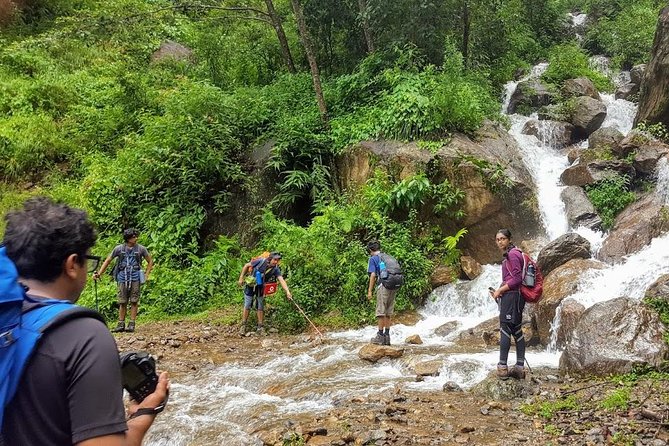
The Annapurna Circuit is popular for a reason. In this guided format, you get the classic mix: arid, sun-baked stretches, then cooler higher terrain, plus lush forests, roaring waterfalls, and time with diverse ethnic communities you meet on the way. The route changes feel constant, so even days that are “just trekking” still bring a new rhythm and new surroundings.
I also like the mindset the itinerary supports. This is not a “do it fast” plan. You build up altitude step by step, take an acclimatization day at Manang, and then move on to the pass with a route that intentionally gives you a sequence to manage the altitude. That is the difference between a trek that feels like a grind and one that feels like progress.
Finally, the guiding adds real value. You get a government-licensed guide, a first aid medical kit, and a trekking map. When the weather turns or you’re tired, having a person who’s used to the trail helps you keep moving with fewer surprises.
Days 1 to 5: Kathmandu to Jagat, then through the Chame and Pisang climb-up
Day 1 starts with the long drive: Kathmandu to Jagat at about 1,100m via Besisahar. It’s 8 to 9 hours of sitting, so treat this as your “settle in” day, not a warm-up hike. If you’re prone to travel stiffness, bring something small you can use during the drive, like a light stretching routine when you stop.
Day 2 is your first real walking day, Jagat to Dharapani (1,960m), about 6 to 7 hours. This day is where you start adapting to the pace that high-altitude trekking demands. You’ll feel your legs wake up, and your breathing begins to match the climb.
Day 3 climbs again: Dharapani to Chame (2,710m), around 5 to 6 hours. Chame is part of the ladder toward higher passes, but it’s also the place where the trek starts to feel more “Himalaya” and less “hiking in the hills.” Expect that weather can shift quickly, so pack for layers rather than one perfect outfit.
Day 4 moves you to Pisang (3,300m), about 5 to 6 hours from Chame. Pisang is a height jump compared to yesterday, and your body will notice it. This is a good day to practice steady effort, not chasing speed, because the trek only gets higher from here.
Day 5 is Pisang to Manang (3,540m), roughly 6 to 7 hours. Manang is the big pivot. You’re still trekking, but you’re also approaching the part of the trip where acclimatization matters. I’d treat this as a “finish strong, rest well” day, since Day 6 is built in for that reason.
Day 6: Why the Manang acclimatization day matters more than extra sightseeing
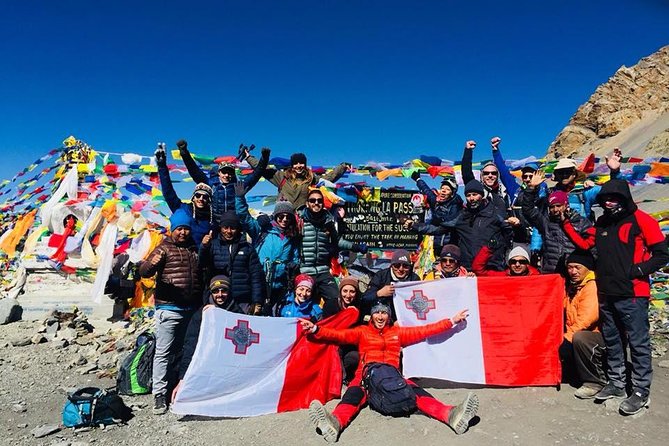
You get an acclimatization day in Manang. That is one of the smartest parts of this plan. Instead of pushing onward to the next high camp immediately, you get a full day to let your body adjust to the altitude level you’ve reached.
This day can be as active or as calm as you choose. Since your operator keeps logistics covered, you don’t have to spend energy researching routes or trail options. You can focus on how you’re feeling and use the time to recover, hydrate, and keep your energy steady for the climb toward Thorong La.
If you’re tempted to sprint ahead of schedule on “easy days,” remind yourself that the pass is coming. This acclimatization slot is your buffer, and it can be the difference between feeling confident on the pass approach and feeling stressed.
Days 7 to 8: Yak Kharka and Thorong Phedi, the ramp-up to the cold and the pass
Day 7 is Manang to Yak Kharka (4,120m), about 4 to 5 hours. Shorter days start to appear as altitude climbs, and that’s part of the strategy. At this point, every step feels bigger, and you’ll likely start thinking more about breath and pacing than about distance.
Day 8 is Yak Kharka to Thorong Phedi (4,450m), again around 4 to 5 hours. Thorong Phedi is where conditions can turn serious. One trekking account described nights dropping to -20°C with strong wind, with water freezing even when carried in a normal bottle. That’s not a guarantee for every season, but it’s a strong warning: this part of the trek can be brutally cold.
This is also where your gear choices pay off. You’ll want a reliable layering system, gloves you can still move in, and something to protect your face from wind. If you’ve never trekked when it’s properly cold, this day is where you’ll learn fast, so plan your warmth like it matters, because it does.
Other lodge to lodge routes near Kathmandu
Day 9: Crossing Thorong La toward Muktinath, where guide support becomes real
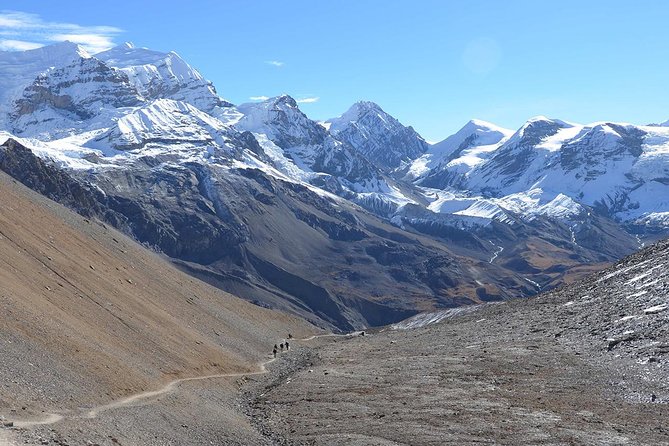
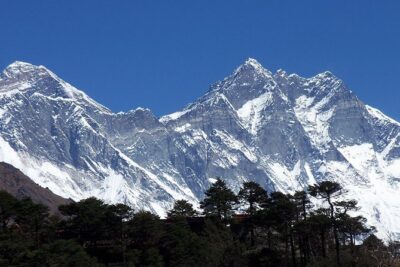
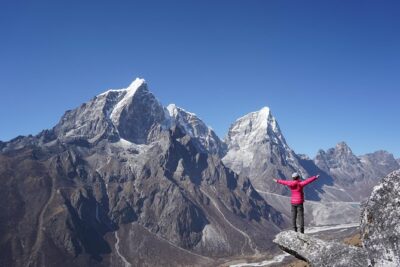
Day 9 runs from Thorong Phedi to Muktinath (3,802m), via Thorong La (5,416m), about 7 to 8 hours. This is the signature day, and it’s the one most trekkers remember.
Your guide support is especially valuable here. In different accounts, trekkers credited guides for keeping them moving through the pass, managing the rhythm, and helping them handle decisions when conditions were challenging. If you worry about fatigue or timing, this is where a calm, experienced person can reduce panic and keep your mind on the next sensible step.
The route drops after the pass, which helps you settle into the next altitude level. You’re not just doing a high point, you’re also transitioning down toward Muktinath, and the day’s physical demands come from that full sequence.
Day 10 to 11: Muktinath to Jomsom, then the drive to Tatopani hot springs
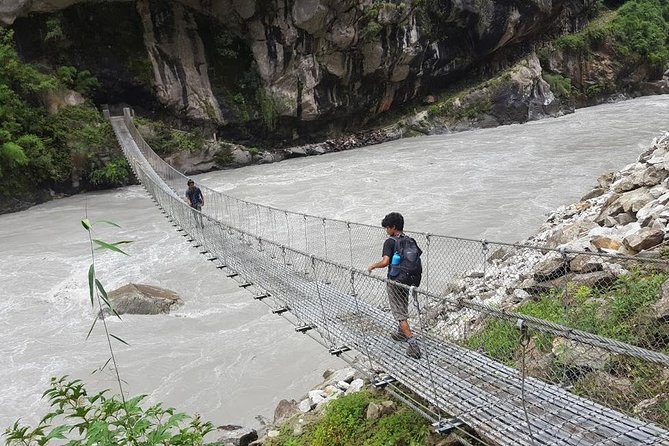
Day 10 is Muktinath to Jomsom (2,743m), about 5 to 6 hours. You’ll likely feel the contrast between the pass zone and the lower terrain, even if it still isn’t “easy.” This is a good day for steady walking and mindful rest, because you’re setting up the next segment.
Day 11 switches from hiking to vehicles: a 4 to 5 hour drive from Jomsom to Tatopani (1,290m). Tatopani is included with a natural hot spring stop, which makes this a practical recovery day. After cold, long hours, being able to soak and loosen up can be more valuable than any extra walking option.
If you’ve got sore feet or stiff calves, treat Day 11 as your reset. Don’t plan to overdo it just because you’re in a warmer altitude. Your body still has another stretch ahead.
Days 12 to 13: Tatopani to Ghorepani, then Poon Hill and onward to Pokhara
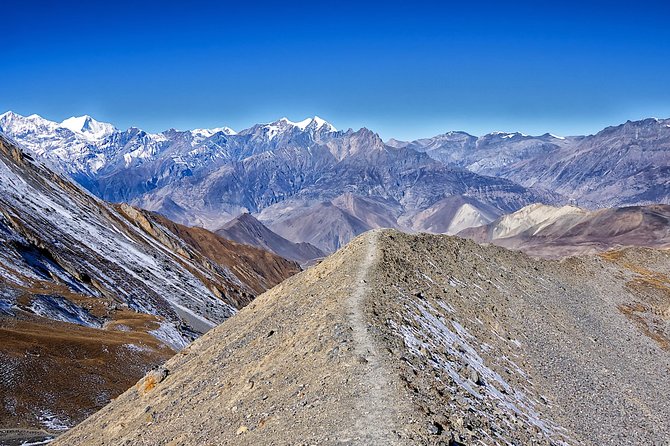
Day 12 is Tatopani to Ghorepani (2,750m), about 7 to 8 hours. This day brings you back into hiking mode. It’s a longer effort after recovery, so pacing still matters. Ghorepani is also a base for the next morning’s viewpoint hike.
Day 13 starts with an early morning hike up to Poon Hill (3,210m), then a trek down to Nayapul (2,070m) and a taxi to Pokhara. The key here is that you’ll be stacking a morning climb with a longer descent. If you’re thinking about footwear, this is the day where comfort and grip pay off, because you’ll want stable footing on downhills.
Once you reach Pokhara, the vibe changes. The trek is the hard work, and Pokhara becomes the “take a breath” reward. You’re at about 822m when you start your final travel day.
Day 14: Pokhara back to Kathmandu, plus why the last drive matters
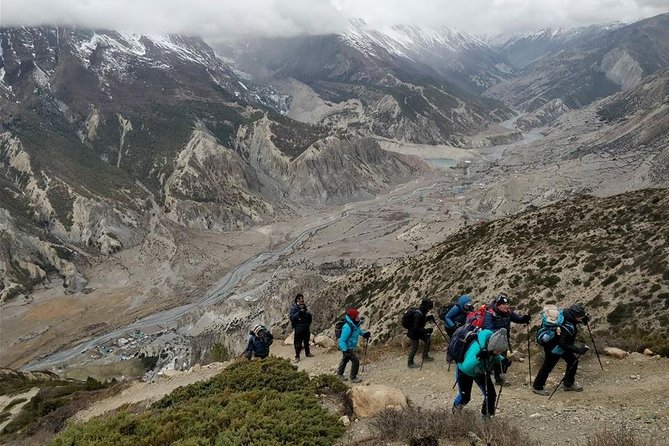
Day 14 is a drive from Pokhara (822m) to Kathmandu (1,400m). It’s not just a transfer. It’s the moment when you stop measuring progress by trail distance and start measuring it by how you feel in your body after 13 trekking days.
This final drop back to a city routine is one reason I like guided itineraries. After the pass and the long hike, having the transport handled means you’re not scrambling to coordinate the end of the trip.
What the $1,175 price really buys, and what you still need to budget
At $1,175 for about 14 days, the value here is in the “get out of your way” parts. You’re paying for a guided experience with government-licensed guide support, tea house lodging during the trek, and included meals. You also get the permits and admin items most independent trekkers end up spending time on: Annapurna Conservation Park permits fee and TIMS Fee, plus a trekking map and first aid medical kit.
Transportation is partially included in specific legs: bus from Kathmandu to Jagat, bus from Jomsom to Tatopani, and private transport from Nayapul to Pokhara. That matters because those transitions can be time-consuming to organize yourself, especially when you’re already tired from hiking days.
Where you need to plan extra is clearly listed. Travel and rescue insurance is not included. Personal expenses are not included, including phone calls, laundry, bar bills, battery recharge, extra porters, bottle or boiled water, and shower costs. Tips for guides and porters are also not included.
A useful way to budget is to treat the trek as mostly covered, but expect small add-ons. If you know you’ll want bottled drinks or want to pay for boiled water rather than filtering or treating, plan for it. If you’d rather not carry anything beyond your daypack, consider whether you’ll need a porter, since porter services are not included unless required by your plan.
Packing and cold-weather reality checks from real pass days
The itinerary has big altitudes, but the bigger lesson from recent accounts is the cold. One account mentioned nights at -20°C, water freezing, and winds around 20 km/hr. That tells you what to prioritize: warmth and protection, not just style.
If you’ve never done winter-style Himalayan trekking, focus on three things:
- Layering that you can adjust, so you’re not overheating while climbing.
- Wind protection, especially for face and hands.
- A water plan, because freezing temps can make normal bottles unreliable.
Your included meals and tea house nights help with comfort logistics, but they don’t replace the need for good personal clothing. Also, since bottle or boiled water is not included, plan your hydration costs and methods ahead of time.
Who this Annapurna Circuit trek suits best
This private tour fits best if you want structure and support. You get your own expedition guide, tea house lodging, permits taken care of, and a schedule that manages altitude with a Manang acclimatization day.
It’s also a good match if you’re traveling with a group and prefer not to mix with strangers. The tour is private, so your day pacing and questions can stay focused.
You should have moderate physical fitness. The daily hours range from about 4 to 8, and the pass day is the longest. If you like steady effort over sprinting, you’ll likely enjoy the trek more.
Should you book this Annapurna Circuit trek?
I’d book it if you want a classic Annapurna Circuit route with the planning stress removed. The combination of guide support, included tea house accommodation, permits and TIMS handled, and meals covered during trekking is practical value at this price.
I’d hesitate if you know you’re not prepared for cold weather. The -20°C and wind account is a big clue that winter conditions can happen, and high altitude will amplify discomfort if your gear is weak. If you’re willing to pack smart and take warmth seriously, you’ll be able to enjoy what this trek is best at: big route variety, mountain travel steps, and a guided path that keeps you moving when the trail gets tough.
If you want to decide quickly, do this: double-check your cold-weather gear and your hydration plan, then commit to the trek as a steady, guided journey, not a casual stroll. That’s when the Annapurna Circuit pays off.
FAQ
How long is the Annapurna Circuit trek?
The tour is about 14 days.
Where does the trek start and end?
It starts with transport from Kathmandu to Jagat, and it ends with drives from Pokhara back to Kathmandu after trekking through to Nayapul and Pokhara.
Is this a private tour?
Yes. Only your group will participate.
What’s the highest point on the route?
The route includes Thorong La at 5,416m.
What kind of accommodation do you get during the trek?
Tea house accommodation during the trek is included.
Are meals included?
Yes. The tour includes three standard meals during trekking (breakfast, lunch, and dinner).
What transport is included?
Bus transportation from Kathmandu to Jagat and from Jomsom to Tatopani is included, plus private transportation from Nayapul to Pokhara.
Are permits and fees included?
Yes. Annapurna Conservation Park permits fee and the TIMS Fee are included.
Is travel and rescue insurance included?
No. Travel and rescue insurance is not included.
Can I cancel and get a refund?
You can cancel up to 6 days in advance of the experience for a full refund, and cancellations closer in have reduced refunds based on the timing rules provided.
Lodge to Lodge Around Kathmandu
The Rest of Our Kathmandu Write Ups

The Circuit, Other Itineraries
Everything else we have reviewed around Kathmandu
- 12 Days Everest Base Camp Trekking
★ 5.0 · 3 reviews - 1 Night 2 Days Chitwan Jungle Safari Tour from Pokhara or Kathmandu
★ 3.0 · 3 reviews - Thamel Rickshaw tour
★ 4.7 · 3 reviews - Kathmandu: Momo Making Class with a Local Chef
★ 5.0 · 3 reviews - Kathmandu: Full-Day Yoga, Body Massage and Pedicure Package
★ 5.0 · 3 reviews - From Kathmandu / Pokhara / Chitwan: River Rafting – 1 Day
★ 4.6 · 3 reviews
Annapurna Circuit Treks worth a second look.
 ★ 5.0Annapurna Circuit Trek with Tilicho LakeFrom $1,093368 reviews
 ★ 5.0Annapurna Circuit TrekFrom $1,15035 reviews
★ 5.0Annapurna Circuit TrekFrom $97534 reviews
★ 5.0Annapurna Circuit TrekFrom $1,15035 reviews
★ 5.0Annapurna Circuit TrekFrom $97534 reviews
 ★ 5.0Annapurna Circuit with Tilicho Lake TrekFrom $1,09325 reviews
 ★ 5.010-Day Adventurous Annapurna Circuit TrekFrom $46725 reviews
 ★ 5.015-Day Private Annapurna Circuit Trek from KathmanduFrom $99518 reviews
 ★ 5.09-Day Annapurna Circuit Trek via Thorong La Pass17 reviews
 ★ 5.0Annapurna Circuit Trek with Tilicho Lake (16 Days)From $1,80015 reviews
Lists this tour sits in