
REVIEW · ANNAPURNA CIRCUIT TREKS
12 days Annapurna Circuit Trek
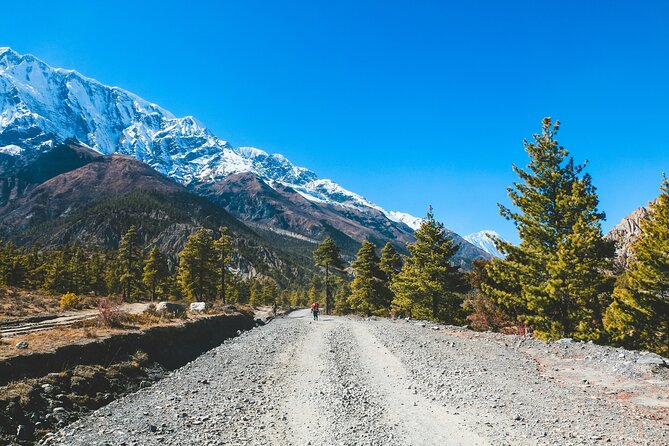
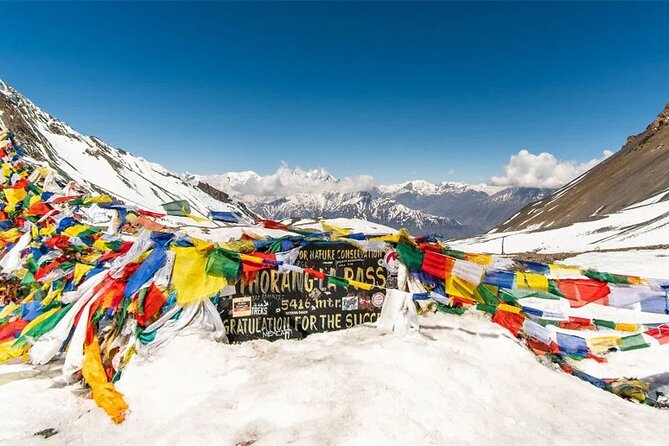
Thorong La is no joke, but it is also unforgettable. This 12 day Annapurna Circuit trek strings together classic villages, big mountain views, and a guided plan that keeps logistics under control. You’ll trek through changing scenery around Manang, cross high country toward Thorong La, and end with the sunrise show from Poon Hill before sliding down to Pokhara.
I like that the package handles the stuff that usually makes trips messy: permits like ACAP and the TIMS card, plus most meals and tea house or lodge accommodation during the trek. I also like that the guide team is described as English speaking and responsive in planning, with names like Bhim Panta and Manit showing up in the company’s support stories. One drawback to consider is that this is a high altitude trek, and the route is built around big early starts, like waking around 3:00 am for Thorong La day, so you need a realistic fitness base.
In This Review
- Key things to know before you go
- What you’re really paying for on the Annapurna Circuit
- The big picture route, from river valleys to Poon Hill sunrise
- Day-by-day on the trail: what each stop feels like
- Day 1: Kathmandu to Dharapani, via Besishar
- Day 2: Dharapani to Chame, the Manang district shift
- Day 3: Chame to Upper Pisang, first big light on a tall peak
- Day 4: Upper Pisang to Geru, sharper views, drier air
- Day 5: Manang acclimatization day, with Ice Lake as an option
- Day 6: Manang to Yak Kharka, leaving the Marshyangdi Valley
- Day 7: Yak Kharka to Thorong Phedi, setting up for the pass
- Day 8: Thorong La and Muktinath, a very early start
- Day 9: Muktinath to Tatopani by jeep, hot springs time
- Day 10: Tatopani to Ghorepani, Thakali settlements and the Kali Gandaki crossing area
- Day 11: Poon Hill sunrise at 3,210m, then on to Pokhara
- Day 12: Pokhara to Kathmandu, with an optional flight upgrade
- The Manang stop: where the trek becomes smarter
- Thorong La day and the recovery design
- Poon Hill and Pokhara: the easy-to-enjoy finale
- What’s included, what’s not, and how to budget without stress
- Included (the big value items)
- Not included (common budget items)
- Group setup and how flexible this trek can feel
- Who should book this, and who should rethink it
- Should you book this Annapurna Circuit tour?
- FAQ
- How long is the Annapurna Circuit trek?
- Where does the trek start and what is the first travel day like?
- Are pickups and transfers included?
- What trekking permits are included?
- Are meals included during the trek?
- Do I need a porter?
- Is travel insurance included?
- Do I need a Nepal visa?
- How do you get from Pokhara back to Kathmandu?
- What is the cancellation policy?
Key things to know before you go
- Permits included (ACAP and TIMS): less paperwork energy while you focus on the trail.
- Most meals included: tea house or lodge breakfast, lunch, and dinner during the trek.
- Acclimatization time at Manang: you get a real pause before the highest pass.
- Thorong La is a sunrise mission: plan for very early starts.
- Hot spring reset at Tatopani: a simple reward after Muktinath.
- Poon Hill sunrise into Pokhara: a clean, scenic landing after the main trek.
Longer Circuit loops over Thorong La
What you’re really paying for on the Annapurna Circuit
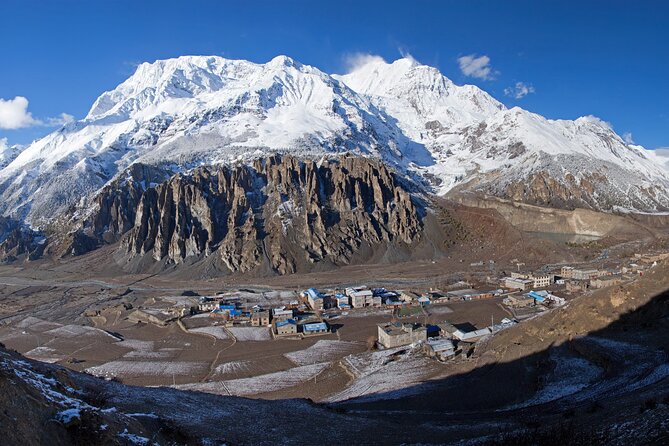
At $1,100 per person, this trek is trying to be a value play by covering the costs that add up fast in Nepal. You are not just buying trail time. You are buying a guided route with licensed, English speaking support, plus transportation pieces that connect Kathmandu, the trek start, and your finish in Pokhara and back to Kathmandu.
Here’s what matters for your travel sanity:
First, you get most meals and lodge or tea house accommodation while trekking. That means you are not constantly budgeting for food stops, and you can keep your head in the game as altitude and cold get more serious.
Second, the trek includes the official mountain trek paperwork costs: Annapurna Conservation Area Permit (ACAP) and TIMS card fees. Those fees are not glamorous, but they remove a common headache when you want to move quickly and avoid last-minute surprises.
The tradeoff is simple: the package does not include your drinks or personal spending, and it also does not include travel insurance. So you’ll still want to budget for water, snacks you buy on your own, and the extras that always pop up on a long trek.
The big picture route, from river valleys to Poon Hill sunrise
This circuit follows the classic arc: start near the Trishuli River corridor, climb into the Manang district area, push toward the Thorong La pass region, drop to religious and hot spring country around Muktinath and Tatopani, then head back toward the west for the views from Ghorepani and Poon Hill.
What I like about this routing is the rhythm. You get days that are not only about altitude, but about settling into the pace. You also get a planned acclimatization pause at Manang, which is one of the smartest things you can do on a trek that climbs high.
The end game is also practical. After the sunrise from Poon Hill, you take a short trek segment, then transition by bus to Pokhara, and finally return to Kathmandu by tourist bus. That matters because a trek ending in a city with clear transport helps you enjoy the trip instead of scrambling at the finish.
Day-by-day on the trail: what each stop feels like
Below is the journey as it unfolds, with the practical reality of what each day tends to mean for your legs, your schedule, and the type of scenery you can expect.
Day 1: Kathmandu to Dharapani, via Besishar
You start with a long drive day. You’ll travel from Kathmandu to Besishar along the Trishuli River, then continue by jeep to Dharapani for the night.
Why this works: the first day is mostly getting you into the mountains without burning your first full day on uphill climbing. The downside is obvious, you still have a lot of time in the vehicle, so if you dislike long travel stretches, plan to stay loose and hydrate.
Other lodge to lodge routes near Kathmandu
Day 2: Dharapani to Chame, the Manang district shift
Today you trek to Chame, which is described as the headquarters of the Manang District. As you climb, the character of the trek changes. The route moves from lower altitude feel into higher country, with mentions of rhododendron forests and widening altitude views.
What to watch: rhododendron zones and forested walking can be comfortable, but you still gain altitude steadily. Keep your effort controlled, even when the path feels friendly.
Day 3: Chame to Upper Pisang, first big light on a tall peak
You move to Upper Pisang, around 3,300 meters, and you arrive with views of Lamjung Himal at 6,893 meters, plus the idea of early light hitting peaks as you set out.
This is a classic “you can feel the air get thinner” day. Expect cooler temperatures and a stronger sense that you are leaving the warmer valley world behind.
Day 4: Upper Pisang to Geru, sharper views, drier air
You travel onward to Geru (via Upper Pisang), with a day that spotlights dramatic north face views. The route highlights perspectives toward Annapurna II, Annapurna III, Annapurna IV, plus Gangapurna, Tilicho, and Pisang Peak. The description also flags a shift toward drier and colder air.
This is one of those days where staying warm is not optional. Even if you are moving, you can cool down fast in exposed areas.
Day 5: Manang acclimatization day, with Ice Lake as an option
You stay in Manang, positioned at the base of Annapurna III, with sweeping views toward Annapurna and Gangapurna. The plan includes a built-in acclimatization day, and the route suggests an optional stroll to Ice Lake.
This stop is valuable because it turns a pass crossing trek into a more measured climb. You’re not just stacking altitude days back-to-back. You’re giving your body a chance to adapt, which is exactly what you want before the high pass day later.
Day 6: Manang to Yak Kharka, leaving the Marshyangdi Valley
You trek from Manang toward Yak Kharka. The route goes via Tenki village, crosses a stream, and continues climbing as you move out of the Marshyangdi Valley and into the northwest toward the Jarsang Khola valley.
Practical feel: this day is about steady grind. The more you move into higher valleys, the more the scenery becomes stark and the walking becomes about rhythm, not quick wins.
Day 7: Yak Kharka to Thorong Phedi, setting up for the pass
You head to Thorong Phedi, the base area at the foot of Thorong La Pass. The route includes ascending to a ridge, descending, and crossing the Marsyangdi River on a wooden bridge, then continuing ascent toward your staging area.
This is the day that often decides how smooth tomorrow feels. You are going uphill, but you are also preparing your body and mindset for the pass night.
Day 8: Thorong La and Muktinath, a very early start
Today is the pass day. You wake around 3:00 am, start the climb, reach the summit, then continue onward to Muktinath as your end stop.
This is why I called Thorong La no joke. The plan is built around early movement, cold air, and a long day’s worth of effort. If you’re the kind of person who panics at early starts, you’ll want to prepare your routine the night before. Once you’re moving, the view moments can feel like they come fast.
Religious destination angle: you finish near Muktinath, which is a strong cultural endpoint after a hard high-altitude day.
Day 9: Muktinath to Tatopani by jeep, hot springs time
You take a jeep from Muktinath to Tatopani in about three hours, then rest at your lodge or visit the hot springs for a swim.
This day is a big deal for recovery. Even if you don’t go fully into hot spring mode, simply getting a ride after days of walking helps your body reset. Your legs will still be talking to you, but the trip gives you a chance to respond instead of just marching onward.
Day 10: Tatopani to Ghorepani, Thakali settlements and the Kali Gandaki crossing area
You leave the hot springs behind and trek toward Ghorepani. The route passes through Thakali settlements of Sikha and Chitre, then reaches the east bank of the Kali Gandaki River, followed by an ascent to Ghorepani.
This is a more human day than you might expect on the circuit. You get village life in the mix, and that helps break up the long altitude story into something more lived-in.
Day 11: Poon Hill sunrise at 3,210m, then on to Pokhara
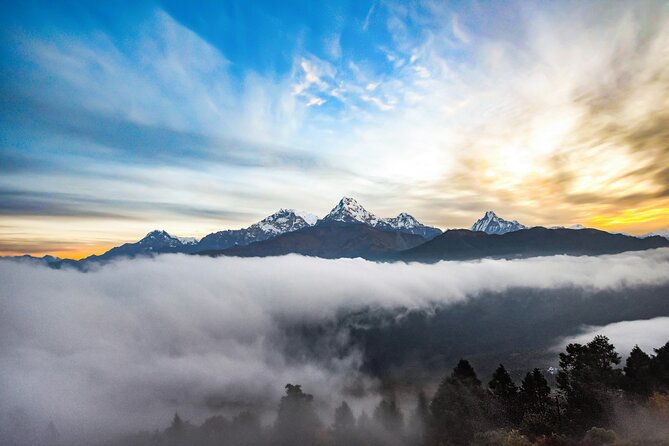
The day starts early. You go up to Poon Hill (at 3,210m) to see sunrise across the Dhaulagiri and Annapurna range, with mention of Machhapuchhre (Fishtail) and Annapurna. After that, you trek from Ghorepani to Birethani, then take a bus to Pokhara.
This is a classic “the effort pays instantly” day. Poon Hill is short on paper, but it’s still early and still at altitude. Then you get the payoff, and then the transport switch into Pokhara makes the day feel like two trips in one.
Day 12: Pokhara to Kathmandu, with an optional flight upgrade
After breakfast in Pokhara, you bid farewell to the lake city and board a tourist bus to Kathmandu. There’s also an option to depart by flight in about 25 minutes, but that flight is not included in the package.
This final piece matters because it lets you finish on your terms. If you want time in Kathmandu to decompress and maybe do a little extra sightseeing, the flight can be a time saver. If you like slower travel and want to enjoy the ride, bus is included.
The Manang stop: where the trek becomes smarter
One day in Manang is not a random break. It is the core “stay healthy” feature of this circuit plan. You spend an acclimatization day at Manang, at the base of Annapurna III, with views toward Annapurna and Gangapurna. The plan even points to Ice Lake as a possible walk.
Here’s why I think this matters to you: the circuit includes the big altitude push toward Thorong La later, so you want your body to start adapting before the pass day. That one extra day can mean less strain and better decision-making when cold and fatigue hit.
You’re also in Manang long enough to feel like you’re not just passing through. Even if you keep the day light, you’ll likely appreciate the chance to eat well, move slowly, and adjust to the air.
Thorong La day and the recovery design
If you only remember one thing from this trek, remember this: the plan gives you a tough pass day, then it gives you a recovery day.
On Day 8, you wake around 3:00 am for the Thorong La climb and summit, then you continue on to Muktinath. On Day 9, you get a jeep ride to Tatopani and the option to use the hot springs.
That sequencing is smart. You are not left with back-to-back punishment days. Instead, the trip structure tries to keep you functional for the rest of the hike. It also helps mentally, because you can see the finish line after a hard day.
Poon Hill and Pokhara: the easy-to-enjoy finale
People underestimate how important the last 48 hours are after a mountain trek. This route ends with a sunrise mission at Poon Hill, then a transfer to Pokhara.
From there, you get:
- a night in Pokhara with breakfast
- time to rest
- an included tourist bus back to Kathmandu (with an optional flight upgrade)
If you enjoy a mix of hiking and city recovery, this ending fits well. You’re not forced to stay in mountain lodges until your last minute. You get a chance to eat normally, do laundry if needed, and let your body cool down.
What’s included, what’s not, and how to budget without stress
Let’s translate the package into real-life costs.
Included (the big value items)
- Kathmandu to Dharapani by public transportation
- Muktinath to Tatopani and Nayapul to Pokhara transportation
- Pokhara to Kathmandu by tourist bus
- One night in Pokhara with breakfast
- Tea house or lodge accommodation during the trek, with meals included: breakfast, lunch, and dinner
- A government licensed experienced guide, English speaking
- Annapurna Conservation Area Permit (ACAP) and TIMS card fee
- Farewell dinner in Kathmandu
- Government and local taxes
- Coverage for guide meals, insurance, salary, and lodging, plus transportation for the guide
That meal plan and permit coverage are the heart of the value. When those are handled, you can focus on the days that matter.
Not included (common budget items)
- Beverages (alcoholic and non-alcoholic)
- Personal expenses like tips, laundry, phone use, and camera or video fees
- Porters, available at $20/day carrying up to 20 kg
- Insurance of any kind
- Nepal Visa, obtained on arrival, with costs listed for different lengths of stay
- Any costs not listed in what’s included
- The optional 25 minute flight from Pokhara to Kathmandu
A quick practical point: the $20/day porter cost can be a smart add-on if you want a lighter pack, but it is your choice. If you plan to self-carry, you still have support via your group and guide, just not the physical help.
Group setup and how flexible this trek can feel
This is offered as a private tour activity, meaning only your group participates. At the same time, the company offers group discounts, and the trek is described as fully customizable.
So what can you expect in reality? Likely a small, focused experience where you’re not fighting for space in a giant tour crowd. Customization matters most if you need pacing adjustments, timing tweaks, or you want to align with your comfort level around the pass and acclimatization day.
Also note the start time listed as 12:15 am. That sounds like an early day start for day one logistics. You should confirm pickup and meeting timing so you can sleep and pack correctly.
Who should book this, and who should rethink it
This trek lists moderate physical fitness as the baseline. That makes sense given the combination of multi-day trekking, high altitude, and very early starts.
You’ll likely enjoy it if you:
- want a guided Annapurna Circuit plan with permits already covered
- like the idea of acclimatization at Manang before a big pass
- want a structured finish with Poon Hill sunrise and a ride into Pokhara
- value warm, practical support from an English speaking guide team
You should rethink it if:
- very early wake ups (like 3:00 am) will be a major struggle for you
- you prefer a less physically demanding route, because this is still a true high mountain trek
Should you book this Annapurna Circuit tour?
I’d book it if you want the Annapurna Circuit experience with less administrative stress and a clear, guided route that already includes the major permit fees (ACAP and TIMS) and most of your trekking costs (tea house/lodge plus meals). The plan also has a thoughtful structure, with Manang acclimatization and a recovery day in Tatopani after Thorong La.
I would hesitate if you’re not ready for early mornings and high altitude effort. This route is designed for active trekking, not casual sightseeing. If that part scares you, you might still enjoy Nepal, just consider a lower altitude trek or a shorter hike before committing to the pass.
If you do book, bring one mindset: go slower than you think you need to go. You’ll enjoy the views more, and your body will thank you later.
FAQ
How long is the Annapurna Circuit trek?
The duration is listed as 12 days, approximately.
Where does the trek start and what is the first travel day like?
You start in Kathmandu and travel to Besishar along the Trishuli River, then take a jeep to Dharapani for the night.
Are pickups and transfers included?
Pickup is offered, and multiple transport segments are included, including transport from Kathmandu to Dharapani and from Pokhara back to Kathmandu by tourist bus.
What trekking permits are included?
The package includes the Annapurna Conservation Area Permit (ACAP) and the TIMS card fee.
Are meals included during the trek?
Yes. Tea house or lodge accommodation during trekking includes breakfast, lunch, and dinner. Pokhara also includes one night with breakfast, plus a farewell dinner in Kathmandu.
Do I need a porter?
Porters are available for $20/day, carrying up to 20 kg, but they are not included automatically.
Is travel insurance included?
No. Insurance of any kind is listed as not included.
Do I need a Nepal visa?
Yes. The Nepal visa is obtained upon arrival at the airport, and visa costs for different durations are listed.
How do you get from Pokhara back to Kathmandu?
The included option is a tourist bus from Pokhara to Kathmandu. There is also an optional 25 minute flight that is not included in the package.
What is the cancellation policy?
Free cancellation is offered, and you can cancel up to 24 hours in advance for a full refund. If you cancel less than 24 hours before the start time, the amount paid will not be refunded.
Lodge to Lodge Around Kathmandu
The Rest of Our Kathmandu Write Ups

The Circuit, Other Itineraries
Everything else we have reviewed around Kathmandu
- 12 Days Everest Base Camp Trekking
★ 5.0 · 3 reviews - 1 Night 2 Days Chitwan Jungle Safari Tour from Pokhara or Kathmandu
★ 3.0 · 3 reviews - Thamel Rickshaw tour
★ 4.7 · 3 reviews - Kathmandu: Momo Making Class with a Local Chef
★ 5.0 · 3 reviews - Kathmandu: Full-Day Yoga, Body Massage and Pedicure Package
★ 5.0 · 3 reviews - From Kathmandu / Pokhara / Chitwan: River Rafting – 1 Day
★ 4.6 · 3 reviews
Annapurna Circuit Treks worth a second look.
 ★ 5.0Annapurna Circuit Trek with Tilicho LakeFrom $1,093368 reviews
 ★ 5.0Annapurna Circuit TrekFrom $1,17594 reviews
★ 5.0Annapurna Circuit TrekFrom $1,15035 reviews
★ 5.0Annapurna Circuit TrekFrom $97534 reviews
 ★ 5.0Annapurna Circuit with Tilicho Lake TrekFrom $1,09325 reviews
 ★ 5.010-Day Adventurous Annapurna Circuit TrekFrom $46725 reviews
 ★ 5.015-Day Private Annapurna Circuit Trek from KathmanduFrom $99518 reviews
 ★ 5.09-Day Annapurna Circuit Trek via Thorong La Pass17 reviews
Lists this tour sits in