
REVIEW · ANNAPURNA CIRCUIT TREKS
20 Days Annapurna Circuit Trek
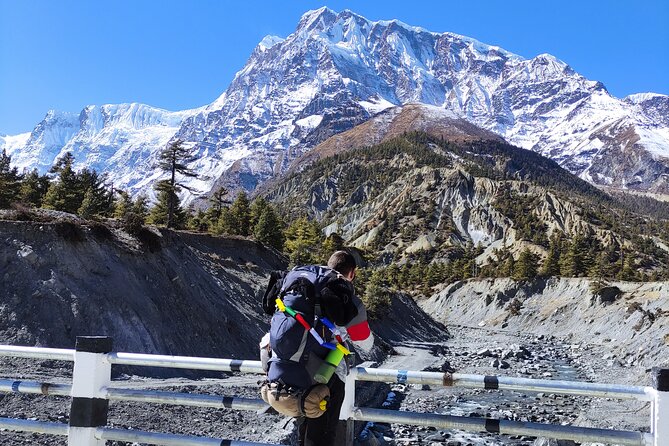
One pass, one big loop, and a lot of changing air. This 20-day trek around the Annapurna massif is special because you move from lower farms and hills to colder, drier high country, with the big payoff at Thorong La Pass (5,416m). I love how the route is built for rhythm, with a dedicated acclimatization day in Manang.
Two things I also really like are the professional guide and porter setup (2 guests per porter, 25kg max) and the included paperwork that keeps things smoother on the trail. One drawback to consider: it is a demanding high-altitude trek, and the pass day starts early, so you’ll need a calm, steady pace and solid basic fitness.
In This Review
- Key things that make this Annapurna Circuit feel worth it
- Why this trek works: you watch Nepal change as you climb
- Day 1 to Day 3: Kathmandu, temple time, then a long road into the hills
- Starting the trek at Dharapani: steep beginnings, farm terraces, and gorge views
- Chame and Pisang: the vegetation change you can feel in the air
- Manang and an acclimatization day: why this matters more than you think
- Yak Kharka and the Ledar zone: preparing for Thorong La with gradual strain
- Thorong La Pass (5,416m) and Muktinath: the steep-to-sacred payoff
- Marpha and Lete: a calmer rhythm through the Kali Gandaki valley
- Tatopani to Ghorepani: from arid high country back to forests
- Poon Hill sunrise (optional), Tikhedhunga, and the downhill to Pokhara
- Returning to Kathmandu and leaving with the circuit still in your head
- Price and what you’re really buying at $1,200 per person
- Logistics that affect your comfort: transfers, group size, and porter weight
- Fitness reality check: what “moderate physical fitness” means for this circuit
- Staff support: why this operator’s team gets praised
- Should you book this Annapurna Circuit trek?
- FAQ
- How long is the Annapurna Circuit trek on this program?
- What’s included for getting to and from the trek?
- Is a guide and porter included?
- What permits are included for the trek?
- Are temple entry fees included?
- What fitness level do I need?
Key things that make this Annapurna Circuit feel worth it
- Thorong La Pass (5,416m) is the clear “main event,” timed to help you reach the top before the worst wind
- Manang acclimatization day gives you a buffer, not just a rushed climb
- Real village trekking through places like Chame, Pisang, Muktinath, Marpha, and Ghorepani, not just mountain views
- Licensed guide plus ACAP and TIMS are included, which reduces planning stress
- Balanced itinerary pacing with long transfer days early on and trekking days later, so you don’t burn out immediately
- Staff support that customers credit as kind and helpful, including language support from the operator when needed
Longer Circuit loops over Thorong La
Why this trek works: you watch Nepal change as you climb
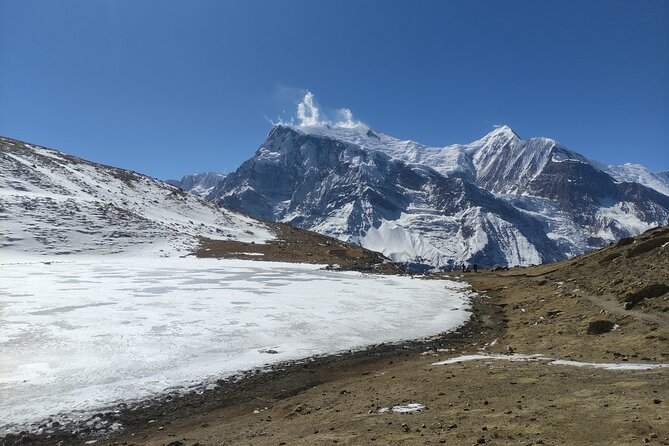
The Annapurna Circuit is famous for one reason you can feel in your legs: the world shifts fast. Early on, you’re walking through greener lower zones and farm terraces. Then the air cools, the scenery thins out, and the route starts to look more like high-altitude desert.
The best part is that the changes happen gradually enough that you still feel connected to what you’re seeing. You’re not jumping from one climate to another in a single day without warning. You also get the cultural payoff, because the trek threads through villages where daily life keeps going whether it’s raining, windy, or snow-dusted.
And then comes the big high-mountain moment at Thorong La Pass, where you go from climb to exposure to achievement, all in one day.
Day 1 to Day 3: Kathmandu, temple time, then a long road into the hills
You start in Kathmandu, landing at Tribhuvan Airport and meeting the Great Adventure Treks representative outside the terminal. From there, you go straight to your hotel and then ease in with city sightseeing the next morning.
Kathmandu highlights on this program include Pashupatinath Temple on the Bagmati River, Boudhanath Stupa with its calm Buddhist energy, and Kathmandu Durbar Square. It’s a helpful warm-up. Before you hit altitude, you get context for Nepal’s religious mix and the way big spiritual sites anchor daily life.
After that, you switch gears. You take a scenic drive toward the Pokhara highway, then keep going to reach Syange (823m/2,699ft). This is one of those travel days that looks long on paper, but it matters, because it positions you to start the trek with real progress the next day rather than turning the first day into chaos.
Practical tip: pack a little slower in Kathmandu. You’ll likely want a clear daypack for temples and then a separate trekking setup for the trail.
Starting the trek at Dharapani: steep beginnings, farm terraces, and gorge views
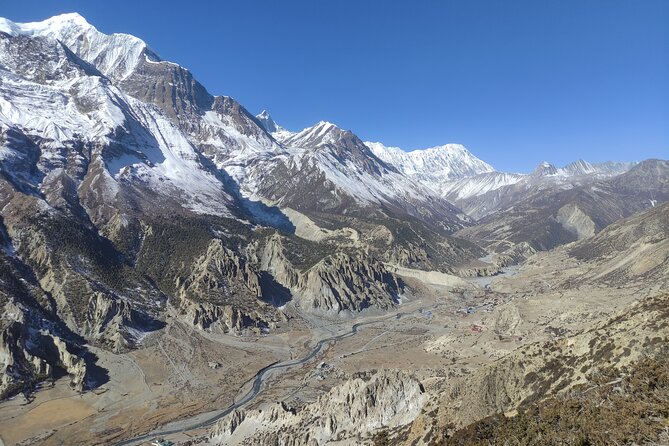
Once you reach Besisahar, trekking begins through gorge scenery, waterfalls, and snow-capped peaks in the distance. The trail is described as steep at first for about half an hour, then it settles into lush farm terraces.
That pattern is common on the circuit, and it’s why the first trekking day is valuable. You get a taste of effort without yet being thrown into the harshest air. You also start seeing how the valleys hold everything together, from water flow to villages.
You’ll finish at Dharapani after about a 6-hour trek. It’s a good “wake up and learn your pace” day.
Chame and Pisang: the vegetation change you can feel in the air
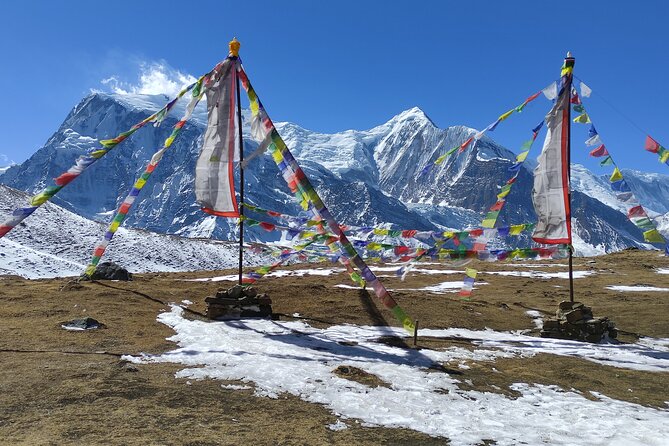
From Dharapani to Chame, the big theme is vegetation shifting. As you go, the air gets cooler and the route travels through forests before reaching Bagarchhap and onward to Chame.
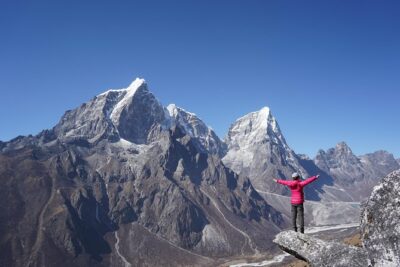
From Chame to Pisang, you climb to about 3,200 meters over roughly 5-6 hours. The description notes a walk along the northern bank of the river, which usually means steady footwork with constant scenery change instead of one long boring line. This is also where many trekkers start noticing that their breathing feels different, even if they aren’t yet at the highest zones.
What I like here is that the days aren’t just “distance goals.” They teach your body what “altitude effort” feels like long before the real challenge arrives.
Other lodge to lodge routes near Kathmandu
Manang and an acclimatization day: why this matters more than you think
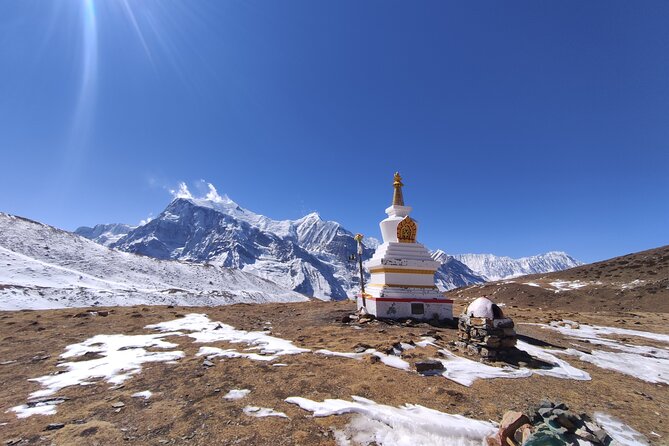
After Pisang comes the route toward Manang, with constant views of high snow-capped peaks. The trek climbs steeply after leaving Pisang, then continues toward Manang in about 5 hours.
Then you get the part that can save your trip: a full acclimatization day in Manang. You explore the village, described as home to around 500 flat-roofed houses, with dramatic scenery around it. This is your time to recover, hydrate, and adjust your expectations.
If you’re tempted to rush every day, this stop is your reminder to slow down. That one day can be the difference between feeling okay later versus feeling wrecked on pass day.
Yak Kharka and the Ledar zone: preparing for Thorong La with gradual strain
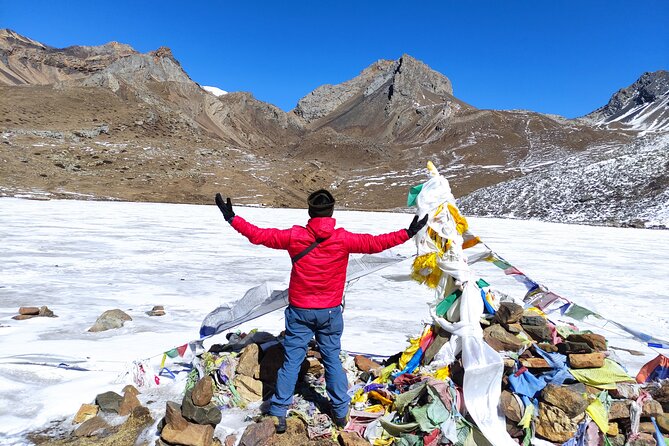
On the way from Manang to Yak Kharka, the trail starts with a slow climb and starts opening up views of multiple peaks like Annapurna II, Gangapurna, Tilicho, and Chuli. The description also mentions that the trail moves into barren, windswept terrain. That is your cue that the high, exposed zones are close.
Yak Kharka to the Thorong High Camp viewpoint is another step up, with a slow climb to the last settlement of Ledar. This day is about positioning, not speed. You’re learning what wind feels like, and you’re building the habit of moving steadily even when your head wants to hurry.
By the time you’re in this zone, the trek is no longer about hiking. It’s about managing effort and staying calm when the air gets thin.
Thorong La Pass (5,416m) and Muktinath: the steep-to-sacred payoff
The pass day starts early so you can reach the top before cold winds intensify. The program notes that the trek is strenuous at the beginning, with steep sections. This early start is not a random detail. It’s a practical way to improve comfort and reduce the chance you get stuck exposed for too long.
Reaching Thorong La Pass is the headline, but the follow-through is what makes it feel like a full experience. After the top, you descend toward the sacred village of Muktinath at around 3,800 meters.
The descent is described as the longest day in trekking terms on the route, and there are limited teahouses once you reach the bottom. That means you should plan your energy carefully, and you should expect that your body will feel like it worked hard, because it did.
The sacred setting at Muktinath adds a different kind of energy to the day. You’re not just dropping altitude, you’re shifting from mountain drama to spiritual place.
Marpha and Lete: a calmer rhythm through the Kali Gandaki valley
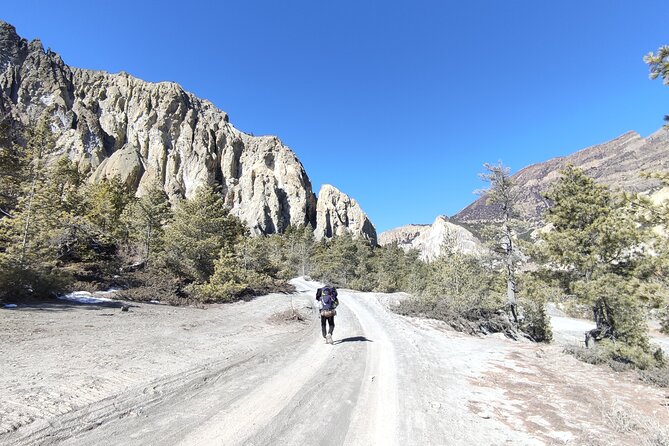
After Muktinath, the trek descends about 1,200 meters to the Kaligandaki river valley floor, with a stop briefly at Ekale Bhatti, described as a lonely teahouse. That kind of stop matters. It breaks the day into manageable parts so you’re not grinding endlessly just to reach the next settlement.
Then comes Marpha (your overnight point), and the next day you walk along Kali Gandaki river downstream toward Lete. Tukuche village and views of towering peaks like Tukuche and Dhaulagiri are part of the scene.
This segment is often where the circuit starts to feel more like a journey than a challenge. The walking continues, but the valley helps with perspective. You can watch the mountain details change as you move, instead of only thinking about altitude numbers.
Tatopani to Ghorepani: from arid high country back to forests
From Lete to Tatopani, the description points to a dramatic change in vegetation. Dry, arid desert gives way to pine and conifer forests, and the trail passes between two giant peaks, Dhaulagiri and Annapurna. You’re also crossing between different kinds of air and ground texture, which helps your brain understand you’re still on a circuit, not just doing one long climb.
Then Tatopani to Ghorepani (about 2,860 meters) gives you a classic mix: river crossings, suspension bridge walking, and the feel of being near more established trekking corridors. You can expect about 6-7 hours on this day.
I like this portion because the circuit stops being only about extremes. You get forests back, plus familiar trekking village energy.
Poon Hill sunrise (optional), Tikhedhunga, and the downhill to Pokhara
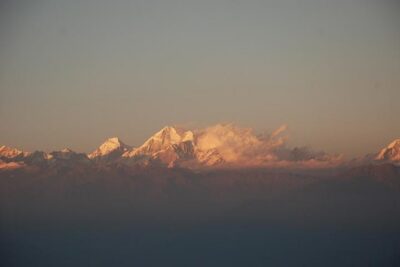
The day after Ghorepani includes an optional one-hour hike to the top of Poon Hill (3,195m) for sunrise views across ranges including Dhaulagiri, Annapurna, and Mt. Manaslu range. Weather decides whether this is a good idea, but if it works, it’s a simple way to get a big view without another full pass-style effort.
Then you head from Tikhedhunga toward Pokhara over about 7 hours, trekking through rural farm villages and nearby cascading waterfalls. After so many days in altitude zones, this descent into Pokhara feels like you’re finally letting your shoulders drop.
Pokhara itself is your recovery chapter. You’ll have a leisure day with options to visit Phewa Lake, Begnas Lake, and Rupa Lake. It’s also a nice time to look at souvenirs and re-stock basics before you fly home.
Returning to Kathmandu and leaving with the circuit still in your head
On your final trekking day in this program, you travel back to Kathmandu by bus, roughly 8 hours, with scenic road views along the Trisuli and Marsyangdi River area. Then the operator transfers you back to the international airport around 3 hours before your flight.
This ending is practical because it reduces last-minute stress. After a high-altitude trek, you don’t want complicated logistics in your final day.
Also, this kind of return route keeps you from feeling like the whole trip ended the second you reached lower elevation. You get one more day of scenery and then you’re done.
Price and what you’re really buying at $1,200 per person
At $1,200 per person for a 20-day circuit, the value is less about the raw number and more about what’s bundled. Included items include airport pickup and drop, Kathmandu sightseeing by car, and the land transfers from Kathmandu to Besisahar by regular bus plus Besisahar to Syange by sharing jeep.
Most importantly for trekkers, you get a government-licensed trekking guide and a porter (with the clear weight limit of 25kg max), plus core permits. That includes ACAP (Annapurna Conservation Area Project Permit) and TIMS (Trekkers Information Management system) card.
Meals are also partially included: lunch is listed 15 times, breakfast 18 times, and dinner 15 times. That matters more than it seems on trek days. Food planning is one less thing you have to negotiate while you’re already focused on altitude, temperature, and trail conditions.
Where costs can pop up:
- Visa and international flight ticket are not included
- Drinks are not included
- Tips for staff are not included
- Rescue and evacuation costs are not included
- Temple entry fees for Pashupatinath, Boudhanath Stupa, and Kathmandu Durbar Square are listed as not included for this program
So, if you like knowing your trip is mostly planned and supported, this package fits that style. If you prefer full DIY budgeting, you’ll still manage, but you’ll want to plan those add-ons.
Logistics that affect your comfort: transfers, group size, and porter weight
This is a private tour/activity. Only your group participates, which tends to make the schedule feel more controlled. You’re also getting pickup coordination at the airport, and that reduces the “first day scramble” in a new country.
The porter arrangement is worth taking seriously. You travel with a porter with a 25kg max and a 2 guests to 1 porter ratio. That’s a good setup if you keep your own pack sensible and don’t try to turn the porter into a second you.
A small but practical detail: the program includes a mobile ticket. That can reduce how much you have to carry in paper form, which is handy on trek days.
Fitness reality check: what “moderate physical fitness” means for this circuit
The operator says you should have moderate physical fitness. For this route, moderate doesn’t mean easy. It means you’re comfortable walking for multiple hours daily, handling steep stretches, and recovering between days.
The biggest body tests are:
- the steep early pass-day climb at Thorong La
- long trekking segments like the post-pass descent toward Muktinath
- the way altitude changes your pace, even if the trail seems normal
If you enjoy steady effort and don’t need to run every hour, you’ll be in the right mindset. If you hate early mornings and wind exposure, plan to adapt your expectations for pass day.
Staff support: why this operator’s team gets praised
The strongest repeated praise is about helpful, kind staff. The operator is described as amazing, and one customer highlights that the owner can speak Chinese very perfectly. That kind of language support can be a big comfort if you’re not strong in English.
There’s also praise for guide and porter care in other treks linked to this operator, with specific names mentioned like guide Jaya and porters Malik and Dinesh. The common thread is simple: they do not treat you like a number.
Since you’re crossing high terrain and dealing with daily logistics, staff quality matters as much as scenery. Good communication helps you dress right, eat right, and keep moving safely.
Should you book this Annapurna Circuit trek?
Book it if you want a supported, well-structured circuit with real villages, a serious high-pass highlight, and guidance that handles permits and trail basics. The included guide, ACAP and TIMS support, and porter system are real value for most first-time or mid-experience trekkers who want fewer uncertainties.
Consider passing if you want a completely DIY experience, or if you know you get stressed by early mornings and strenuous high-altitude days. This is a trek built for effort and patience, not for quick, casual hiking.
If you’re aiming for the classic Annapurna Circuit story arc, from change-in-vegetation magic to Thorong La Pass drama to a reward in Pokhara, this plan looks like a solid way to get it done with fewer moving parts.
FAQ
How long is the Annapurna Circuit trek on this program?
The trek is listed as approximately 20 days.
What’s included for getting to and from the trek?
Airport pickup and drop are included, and you also get transfers from Kathmandu to Besisahar by regular bus and from Besisahar to Syange by sharing jeep. You also return to Kathmandu by bus near the end and get transfer back to the international airport.
Is a guide and porter included?
Yes. The program includes a professional trekking guide with a government license and a porter, with the porter weight limit listed as 25 kg max (with 2 guests to 1 porter).
What permits are included for the trek?
The Annapurna Conservation Area Project Permit (ACAP) and the TIMS (Trekkers Information Management system) card are included.
Are temple entry fees included?
No. Entrance fees are listed as not included for Pashupatinath Temple, Boudhanath Stupa, and Kathmandu Durbar Square.
What fitness level do I need?
The program says you should have moderate physical fitness.
Lodge to Lodge Around Kathmandu


The Rest of Our Kathmandu Write Ups



The Circuit, Other Itineraries
Everything else we have reviewed around Kathmandu
- 12 Days Everest Base Camp Trekking
★ 5.0 · 3 reviews - 1 Night 2 Days Chitwan Jungle Safari Tour from Pokhara or Kathmandu
★ 3.0 · 3 reviews - Thamel Rickshaw tour
★ 4.7 · 3 reviews - Kathmandu: Momo Making Class with a Local Chef
★ 5.0 · 3 reviews - Kathmandu: Full-Day Yoga, Body Massage and Pedicure Package
★ 5.0 · 3 reviews - From Kathmandu / Pokhara / Chitwan: River Rafting – 1 Day
★ 4.6 · 3 reviews
Annapurna Circuit Treks worth a second look.
 ★ 5.0Annapurna Circuit Trek with Tilicho LakeFrom $1,093368 reviews
 ★ 5.0Annapurna Circuit TrekFrom $1,17594 reviews
★ 5.0Annapurna Circuit TrekFrom $1,15035 reviews
★ 5.0Annapurna Circuit TrekFrom $97534 reviews
 ★ 5.0Annapurna Circuit with Tilicho Lake TrekFrom $1,09325 reviews
 ★ 5.010-Day Adventurous Annapurna Circuit TrekFrom $46725 reviews
 ★ 5.015-Day Private Annapurna Circuit Trek from KathmanduFrom $99518 reviews
 ★ 5.09-Day Annapurna Circuit Trek via Thorong La Pass17 reviews
Lists this tour sits in