
REVIEW · ANNAPURNA CIRCUIT TREKS
Annapurna Circuit Trek in Nepal (9 Days)
A seriously high pass and a seriously good support team. This 9-day Annapurna Circuit trek is built for people who want real mountain trekking plus licensed English-speaking guidance, not guesswork. You also get tea house nights and a full set of trek meals, which means you spend less time negotiating for food at altitude and more time walking. One thing to plan for: the route is physically demanding, and the big day includes an early start for Thorong La Pass.
What I like is how the schedule protects you from doing everything at once. There’s time to ease in, including an acclimatization day in Manang, and the guides keep the pace sensible when the air thins. If you’re the type who appreciates clear logistics and steady care, this kind of tour style makes the whole thing feel less stressful from Kathmandu to Pokhara.
In This Review
- Key things I’d want you to know first
- Why the Annapurna Circuit works so well in 9 days
- Price and value: what $880 includes, and what costs extra
- The day-by-day route: Kathmandu to Pokhara, in real trekking time
- Day 1: Kathmandu pickup, bus via Besisahar, then jeep to Bhulbhule
- Day 2: Bhulbhule to Chame through alpine views and Tibetan-style villages
- Day 3: Rhododendron and pine forests, suspension bridges, and Paungda Danda
- Day 4: Into Manang, with Humde and Annapurna views
- Day 5: Manang acclimatization day with optional hikes and monasteries
- Day 6: Trek to Yak Kharka, settlements, farmlands, and steady ascent
- Day 7: Thorong Phedi day, a slower climb with serious views
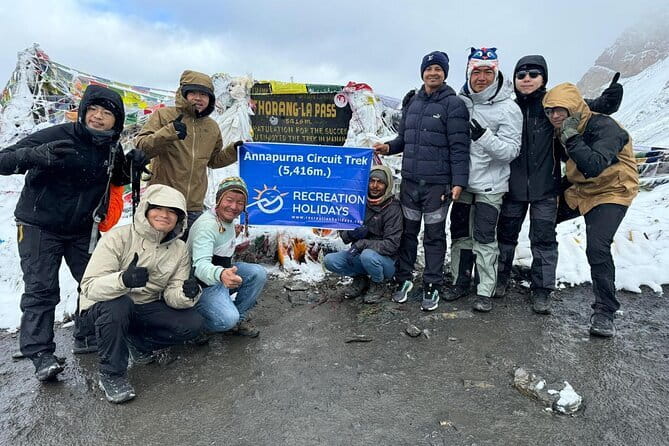
- Day 8: The 5,416 m Thorong La Pass and the route to Muktinath
- Day 9: Muktinath to Pokhara, descending via jeep or bus
- What the tea houses and meals really mean for your comfort
- Guides, safety, and the kind of care that shows up on hard days
- Acclimatization and the Thorong La Pass plan at 5,416 m
- Who should book this Annapurna Circuit trek
- Should you book this 9-day Annapurna Circuit with Recreation Holidays?
- FAQ
- What time does the trek start?
- Where does the tour start and end?
- Is pickup from Kathmandu offered?
- What kind of accommodation is included during the trek?
- Are meals included?
- Do I need trekking permits?
- Is a guide included, and do they speak English?
- Are porters available?
- Do I need travel and medical insurance?
- Is free cancellation available?
Key things I’d want you to know first
- Hotel pickup included for an early start from Kathmandu
- Tea house accommodation (8 nights) with meals so you’re not doing daily food math
- Manang acclimatization day plus optional hikes and monasteries
- Thorong La Pass day starts around 3 AM, because that’s when it’s safer and calmer
- Permits and first-aid support included, with emergency evacuation support via your travel insurance
- Porters available if you want them, at an extra $240 per porter
Longer Circuit loops over Thorong La
Why the Annapurna Circuit works so well in 9 days
The Annapurna Circuit is famous for variety, and this itinerary uses that best advantage: you get a step-by-step climb through changing regions, then you commit to the big high crossing.
You start with a travel day from Kathmandu toward the trailhead area, then you build upward through forest, suspension bridges, Tibetan-influenced villages, and apple-growing country. By the time you reach Manang, you’re not just collecting views. You’re adjusting your body for altitude, so the pass day does not feel like an abrupt cliff to the finish.
And yes, you’ll see plenty of dramatic peaks. But the more meaningful part for most people is the rhythm: walking, eating, sleeping at a higher level, and learning how to manage effort when you’re breathing slower.
Price and value: what $880 includes, and what costs extra
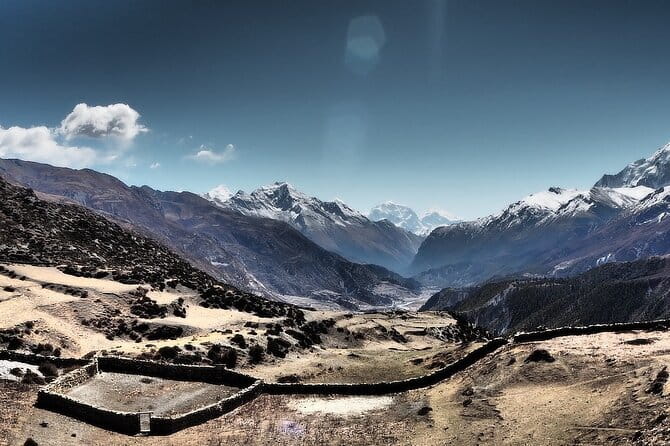
At $880 per person, the real value is what you do not have to organize yourself. This trek includes the key backbone items: licensed English-speaking guide, permits, tea house lodging for 8 nights, and most meals (8 breakfasts, 8 dinners, 9 lunches). You also get local transport from Kathmandu to Dharapani and from Muktinath to Pokhara, plus luggage storage during the trek.
It also includes safety essentials: a first-aid medical kit, and emergency evacuation support that is covered by your travel insurance. That last part matters. The company supports the process, but you still need to carry insurance that covers evacuation.
What you should expect to pay extra for:
- Nepal entry visa (not included)
- International airfare (not included)
- Kathmandu and Pokhara accommodation (not included)
- Travel and medical insurance (not included)
- Porter services (optional) at $240 per porter, with the note that it is 1 porter for every 2 trekkers
- Any private transportation (explicitly listed as not included)
If you’re comparing to a cheaper plan, the bargain often disappears when you count permits, guides, meals, and the transport to and from the trekking route. Here, those are already handled for you.
The day-by-day route: Kathmandu to Pokhara, in real trekking time
This itinerary is built around full walking days, with several days clocked around 12 hours. That’s not a problem if you’re mentally ready for long trail time and you pace correctly. It can feel like a lot on paper, but it usually feels manageable once you’re moving and stopping often enough to drink, eat, and let your legs recover.
Day 1: Kathmandu pickup, bus via Besisahar, then jeep to Bhulbhule
You start early, with pickup from your hotel in Kathmandu around 6 or 7 AM, then a scenic bus ride to Bhulbhule via Besisahar. Once you reach Bhulbhule, you transfer to a shared jeep for the next connection toward the trekking start area.
Practical takeaway: Day 1 is about getting you positioned, not about earning your dinner. Even so, it’s long travel and it sets the tone. Hydrate before you leave, and keep a small snack bag ready, because these early starts can make you hungry faster than you expect.
Other lodge to lodge routes near Kathmandu
Day 2: Bhulbhule to Chame through alpine views and Tibetan-style villages
Today takes you into cooler alpine regions. The trek passes Tibetan villages like Bagarchhap and Danakyu, with apple orchards around, which is a nice change of pace from pure mountain scenery.
You’ll also feel the environment shift as you go higher. That can mean easier hiking sections mixed with steeper parts. The win here is variety, plus the cultural texture of villages where you’re not just passing through concrete towns.
Day 3: Rhododendron and pine forests, suspension bridges, and Paungda Danda
This day leans into forests. You’ll walk through dense rhododendron and pine, then out toward meadows and steep ascents. Expect multiple suspension bridges, which break up the day visually, and then a dramatic arrival at Paungda Danda, a curved rock face.
Why it matters: bridges and rock features create clear checkpoints. When the day feels long, that structure helps you stay calm and focused on the next goal.
Day 4: Into Manang, with Humde and Annapurna views
After breakfast, you trek toward Manang, one of the major highlights of the circuit. The day starts flatter, then gradually climbs to Humde. Along the way you get panoramic views of Annapurna II, III, and I.
This is a classic “get higher without panic” kind of day. You should still pace, but the gradual ascent gives you a better chance to settle into the altitude before the higher-stakes days.
Day 5: Manang acclimatization day with optional hikes and monasteries
This is your recovery and adjustment day. It’s reserved to help your body handle higher altitude. In Manang you can explore the village, hike up to glacial lakes at the base of Gangapurna, or visit local monasteries.
This is one of the best parts of the itinerary. Most people don’t fail because of the pass alone. They struggle because they rush the body. A planned acclimatization day helps you avoid that.
Tip: even on an acclimatization day, do not treat it like a “go hard” day. Choose an option that keeps you moving but doesn’t exhaust you.
Day 6: Trek to Yak Kharka, settlements, farmlands, and steady ascent
You trek to Yak Kharka after a restful night. The route passes local settlements and cultivated farmlands, and the ascent is described as steady but moderate, giving you time to keep acclimating. You’ll also cross a suspension bridge again.
This day is often about consistency. If you keep your effort steady, you’ll arrive feeling like you earned your bed, not like you survived it.
Day 7: Thorong Phedi day, a slower climb with serious views
Today goes toward Thorong Phedi. The hike is estimated around 4 to 5 hours, with a gradual incline. Because of altitude, the pace usually feels slower, but the views make it worth it.
A smart approach is to move smoothly, not fast. Keep your stops short and frequent. Eat something small before you feel hungry, because hunger can sneak up while you’re working harder for each breath.
Day 8: The 5,416 m Thorong La Pass and the route to Muktinath
This is the headline day. You start early, around 3 AM, to cross Thorong La Pass, the highest point on the Annapurna Circuit at 5,416 meters. You get panoramic views at the summit, then you continue after the pass toward Muktinath Temple.
Why the early start matters: at this altitude, timing can be the difference between a smoother experience and a more stressful one. The schedule here is built for that reality.
Also, plan for a long cold day. You’ll be moving hard early, and then conditions can turn quickly. Layering and wind protection matter more than extra bravery.
Day 9: Muktinath to Pokhara, descending via jeep or bus
After a well-deserved rest, you travel from Muktinath to Pokhara by jeep or bus. The drive includes scenic views of the lower Mustang Valley as you descend, and you finish with a celebratory sense of completion.
This last day is underrated. The descent is part of the story, and the ride gives your legs time to recover while you still get big views.
What the tea houses and meals really mean for your comfort
This trek uses tea house accommodation for 8 nights, twin sharing. That’s a normal and good format for the Annapurna region. The advantage is you do not have to carry heavy cooking gear, and you can focus your energy on the walking.
Meals are set up too: 8 breakfasts, 8 dinners, and 9 lunches are included. That reduces the usual trekking pain points like searching for a dining option when you’re cold and tired.
Here’s what you should still manage yourself:
- Keep your water consistent. Long days plus altitude can dehydrate you faster than you think.
- Eat lunch even if you don’t feel ravenous. Altitude often changes your appetite.
- Bring a simple snack or two. Included meals cover basics, but a personal snack is comfort insurance.
If you’re picky about food, tea houses usually offer options, but exact menus are not listed here. Expect local, simple meals that are meant to fuel trekking.
Guides, safety, and the kind of care that shows up on hard days
The trip is led by a licensed, English-speaking guide, and there’s an assistant guide for groups of 8+. You also get a first-aid medical kit and all necessary trekking permits handled.
One of the most praised things in the feedback is professionalism and communication. People talk about clear information from the start and genuine care during the tougher parts. That matches what you want on a route where the pass day is serious and where altitude can change how you feel quickly.
Also, I like that there’s a named leadership presence in the company’s culture. In the feedback you’ll see mention of Hari, the founder, which suggests the organization takes ownership of quality rather than tossing you to the trail and hoping for the best.
Reality check: even with great guidance, you still own your pace and your body signals. The guide helps you make good decisions. You still have to speak up if you feel off.
Acclimatization and the Thorong La Pass plan at 5,416 m
This itinerary does two smart things: it includes an acclimatization day in Manang, and it schedules the pass for an early start on Day 8.
Crossing Thorong La Pass at 5,416 meters is the moment most people will remember. But the healthier way to treat it is as the result of preparation, not as a random test dropped on you at the end.
What you can do to help the plan work:
- Use Manang day to rest and take it easy, even if your legs feel good.
- On Day 7, treat Thorong Phedi as a staging night. Don’t try to “win” the climb.
- Hydrate and keep eating. Low appetite is normal at altitude, but skipping food can make the pass harder.
If you’ve never hiked at altitude, this is still doable for people with moderate physical fitness, but you should be realistic. Slow and steady is the winning strategy.
Who should book this Annapurna Circuit trek
This trek fits best if you:
- Have moderate physical fitness
- Want a guided experience with permits, meals, and tea house stays already arranged
- Prefer small group or private participation so you can manage your pace with less crowd pressure
- Like culture as much as views, since you pass Tibetan-influenced villages, apple orchards, and end at Muktinath Temple
It might not fit if you:
- Hate very early wakeups, because Day 8 starts around 3 AM
- Want a light, casual walk. Several days are long, and the pass day is demanding
- Don’t plan to bring travel or medical insurance, since emergency evacuation support is linked to travel insurance
If you’re traveling solo and you want a social experience, the private tour format could still work depending on how they run groups, but the key is you won’t be mixed into random strangers. You’ll be in your own group.
Should you book this 9-day Annapurna Circuit with Recreation Holidays?
I think you should book if you want a well-run trek where the hard parts are supported, not improvised. The value comes from the basics being handled: guide leadership, permits, tea houses, meals, and transport into and out of the trekking area. The acclimatization day in Manang is a big deal, and the pass plan starts when it should.
You should be cautious if you’re not serious about altitude pacing, because even with good guides, you still have to treat this trek as real mountain trekking. Also budget for the extras that are not included, especially Kathmandu and Pokhara accommodation and travel insurance. If you want a porter, factor that in too.
If you’re ready for long hiking days and you want the Annapurna Circuit experience without the logistics headache, this is a solid choice.
FAQ
What time does the trek start?
The start time is listed as 6:15 am. Day 1 also mentions hotel pickup in Kathmandu around 6 or 7 AM.
Where does the tour start and end?
It starts around Tribhuvan Airport, Kathmandu, Nepal, and ends in Pokhara, Nepal.
Is pickup from Kathmandu offered?
Yes. Pickup is offered from your hotel in Kathmandu.
What kind of accommodation is included during the trek?
You get 8 nights of tea house accommodation during the trek, with twin sharing.
Are meals included?
Yes. The package includes 8 breakfasts, 8 dinners, and 9 lunches during the trek.
Do I need trekking permits?
The trekking permits are included as part of the tour.
Is a guide included, and do they speak English?
Yes. You get a licensed English-speaking guide, and for groups of 8+ there is also an assistant guide.
Are porters available?
Porter services are available upon request for $240 per porter, with the note that it is 1 porter for every 2 trekkers.
Do I need travel and medical insurance?
Travel and medical insurance are not included. Emergency evacuation support is covered by your travel insurance.
Is free cancellation available?
Yes, you can cancel up to 24 hours in advance for a full refund. If you cancel less than 24 hours before the experience start time, the amount paid is not refunded.
Lodge to Lodge Around Kathmandu
The Rest of Our Kathmandu Write Ups

The Circuit, Other Itineraries
Everything else we have reviewed around Kathmandu
- 12 Days Everest Base Camp Trekking
★ 5.0 · 3 reviews - 1 Night 2 Days Chitwan Jungle Safari Tour from Pokhara or Kathmandu
★ 3.0 · 3 reviews - Thamel Rickshaw tour
★ 4.7 · 3 reviews - Kathmandu: Momo Making Class with a Local Chef
★ 5.0 · 3 reviews - Kathmandu: Full-Day Yoga, Body Massage and Pedicure Package
★ 5.0 · 3 reviews - From Kathmandu / Pokhara / Chitwan: River Rafting – 1 Day
★ 4.6 · 3 reviews
Annapurna Circuit Treks worth a second look.
 ★ 5.0Annapurna Circuit Trek with Tilicho LakeFrom $1,093368 reviews
 ★ 5.0Annapurna Circuit TrekFrom $1,17594 reviews
★ 5.0Annapurna Circuit TrekFrom $1,15035 reviews
★ 5.0Annapurna Circuit TrekFrom $97534 reviews
 ★ 5.0Annapurna Circuit with Tilicho Lake TrekFrom $1,09325 reviews
 ★ 5.010-Day Adventurous Annapurna Circuit TrekFrom $46725 reviews
 ★ 5.015-Day Private Annapurna Circuit Trek from KathmanduFrom $99518 reviews
 ★ 5.09-Day Annapurna Circuit Trek via Thorong La Pass17 reviews
Lists this tour sits in